Spots, stains and spills
What to do in the first five minutes matters more than anything we do later. And most of what people instinctively do makes it worse.
Calls answered 7am to 8pm · same-day service usually available
Blot with a dry white cloth, no heat, no rubbing. Then ring us.
Spot or stain
The distinction that determines everything, and it is worth knowing which you have.
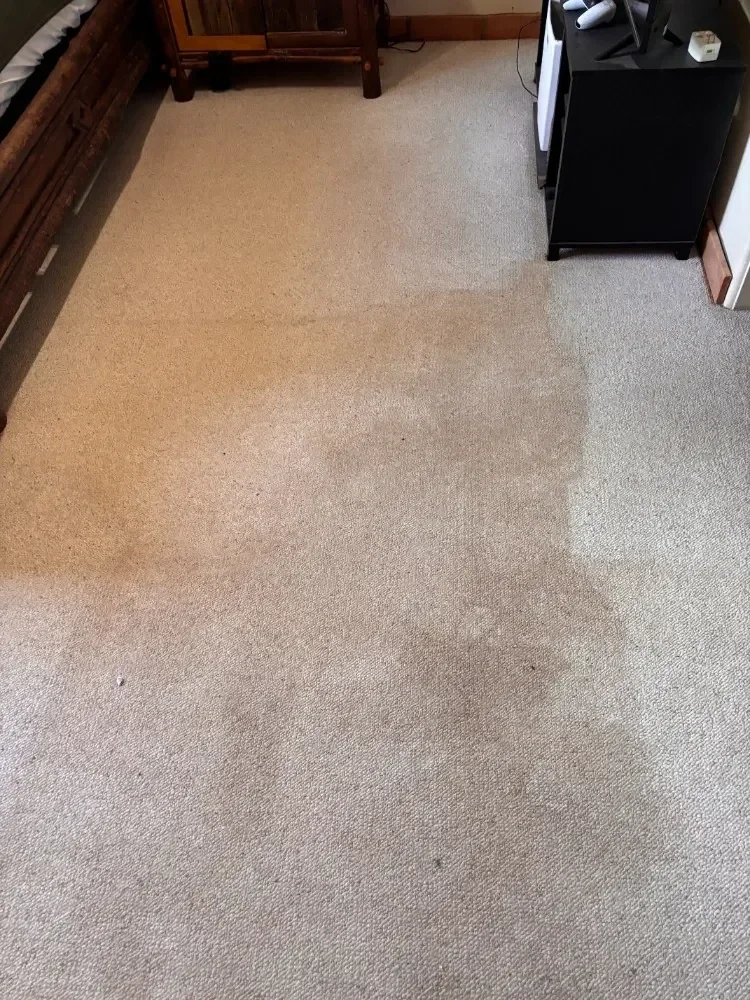
A spot is material sitting on or in the fiber. It has not changed the carpet, it is just there, and a proper clean removes it. Most fresh spills are spots.
A stain has altered the fiber or its dye. There is nothing sitting there to extract, because the carpet itself is now a different color in that place.
Time is what converts one into the other. A spill blotted in the first minute is nearly always a spot. The same spill left for a week has had time to react with the fiber, and on some carpet that reaction is permanent.
What to do in the first five minutes
- Get the bulk up first. Solids lifted off with a spoon or a blunt edge, liquids soaked up with a dry white cloth or paper towel.
- Blot, do not rub. Press down firmly, lift, move to a clean part of the cloth, repeat. Rubbing drives material deeper and damages the fiber tips.
- Work from the outside in. Blotting from the edge toward the middle stops the spill spreading into clean carpet.
- Use a white cloth. A colored one can transfer its own dye into damp carpet, which turns one problem into two.
- Keep going longer than feels necessary. Most people stop while there is still a good deal of liquid in the pad.
- Weigh a cloth down on it for an hour afterward to draw up what is still in the backing.
What not to do
Do not rub or scrub
The most common instinct and the most damaging. It pushes the spill through the backing into the pad, and it abrades the fiber tips permanently, leaving a fuzzy patch that stays visible long after the spill is gone.
Do not apply heat
No hot water, no steam cleaner from the cupboard, no hair dryer. Heat sets protein, which is most of what is in food, drink and pet accidents. It is the difference between a spot and a permanent stain.
Do not saturate it
Pouring water on a spill pushes it through the backing into the pad and spreads it outward into a larger area. You have converted a small problem into a wide one and given yourself a wicking issue later.
Be careful with supermarket products
Many leave a sticky residue that attracts soil, so the spot becomes a permanently dirty patch that reappears within weeks. Some are high-pH and damage wool. Blotting with plain water is usually safer than a product nobody has checked against your fiber.
Why spots come back
The most common complaint after any cleaning, and it has a mechanical explanation.
When a spill reaches the backing or the pad, cleaning removes what is at the surface and leaves what is beneath. As the carpet dries, moisture travels upward and carries that material back to the surface with it. That is wicking.
It is not a failed cleaning and it does not mean somebody cut corners. It is what happens when a spill went deeper than the cleaning could reach, and you frequently cannot tell it will happen until a day or two afterward.
That is exactly why we come back free within 14 days. The situation is real, so the guarantee has to be.
The ones that need honesty
Red dye
Fruit drinks, some sodas, red wine. On nylon, red dye can bond permanently to the fiber. Frequently it improves substantially and occasionally it does not move, and which of those you get depends on the fiber and how long it sat.
Bleach and chemical spots
Household cleaners, acne medication, some pet products. The color has been removed from the fiber, so there is nothing to clean off. Re-dyeing is a repair trade rather than a cleaning one.
Old pet accidents
If it reached the pad, surface cleaning will not resolve the odor no matter how good it looks afterward. That deserves a proper conversation before you pay for anything.
Furniture stain and rust
Wood stain bleeding from a furniture leg, or rust from metal feet on damp carpet. Both are dye or oxide in the fiber. Rust sometimes responds to specific treatment and wood bleed usually does not.
What to tell us when you ring
Three things, and they change what we bring and what we recommend.
What it was, as best you know. How long ago. What you already put on it, including supermarket products, because residue changes how the area behaves and we would rather know than discover it.
Nobody is being judged for having tried something. It just genuinely helps.
Questions
What is the difference between a spot and a stain?
A spot is material sitting on or in the fiber and it comes out. A stain has altered the fiber or its dye, and it does not. Most fresh spills are spots and become stains with time.
What should I do with a fresh spill?
Blot with a dry white cloth, pressing rather than rubbing, and work from the outside in. Do not scrub, do not apply heat, and do not saturate it with water.
Why does rubbing make it worse?
It drives the material deeper into the fiber and into the backing, and it damages the fiber tips, which leaves a permanently fuzzy patch even after the spill is gone.
Why did my spot come back?
Wicking. Material in the backing travels back up to the surface as the carpet dries. It is common, it is not a failed cleaning, and it is why we return free within 14 days.
Are supermarket spot cleaners bad?
Many leave a sticky residue that attracts soil, so the spot turns into a permanently dirty patch. Some are also high-pH and damage wool. Blotting with water is usually safer than a product you do not know.
Can you remove red wine or pet stains?
Frequently, substantially. Whether they go completely depends on the fiber, what the spill was and how long it sat. We will look before promising anything.
Calls answered 7am to 8pm · same-day service usually available
We will tell you what will and will not come out, before you book.